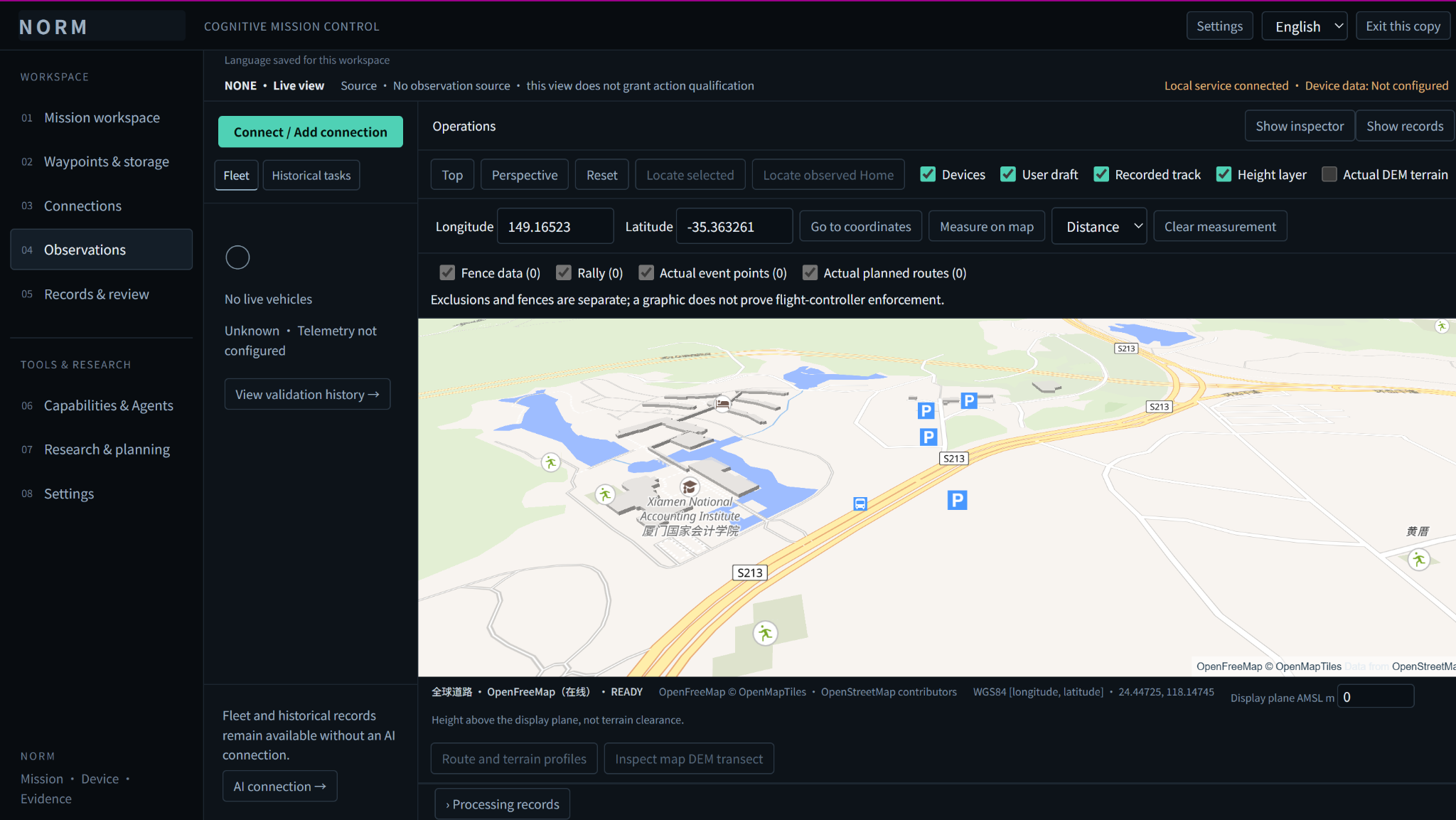
Windows preview
The project reports a packaged application for demonstrations and engineering evaluation, with task and draft-management workflows tested.
From the brief to waypoints and review.
Built around fixed-wing missions.
Drone missions often start with a simple request: “Take a look over this area.” Then preparation begins, and so do the questions: Where exactly? Which points should the route pass through? What constraints must stay in view? Do the changes still match the request? Can someone else make sense of the plan?
The technology isn’t always the hard part. The information is scattered: requirements live in a chat, locations on a map, and waypoints in another tool. The reason for a change stays in the head of whoever made it.
How the workflow fits togetherNORM aims to make mission preparation less of a grind. It is an AI-assisted drone mission workspace that brings requirements, waypoints, maps, reviews, and records into one place. A mission starts as an idea and becomes a plan you can inspect, edit, discuss, and confirm.
The project reports a packaged application for demonstrations and engineering evaluation, with task and draft-management workflows tested.
Some serial connection and initialization checks are complete. Full mission reading, independent upload verification, and limited control have not all passed acceptance.
Read the development statusRequirements, drafts, review, and records. Each has a place.
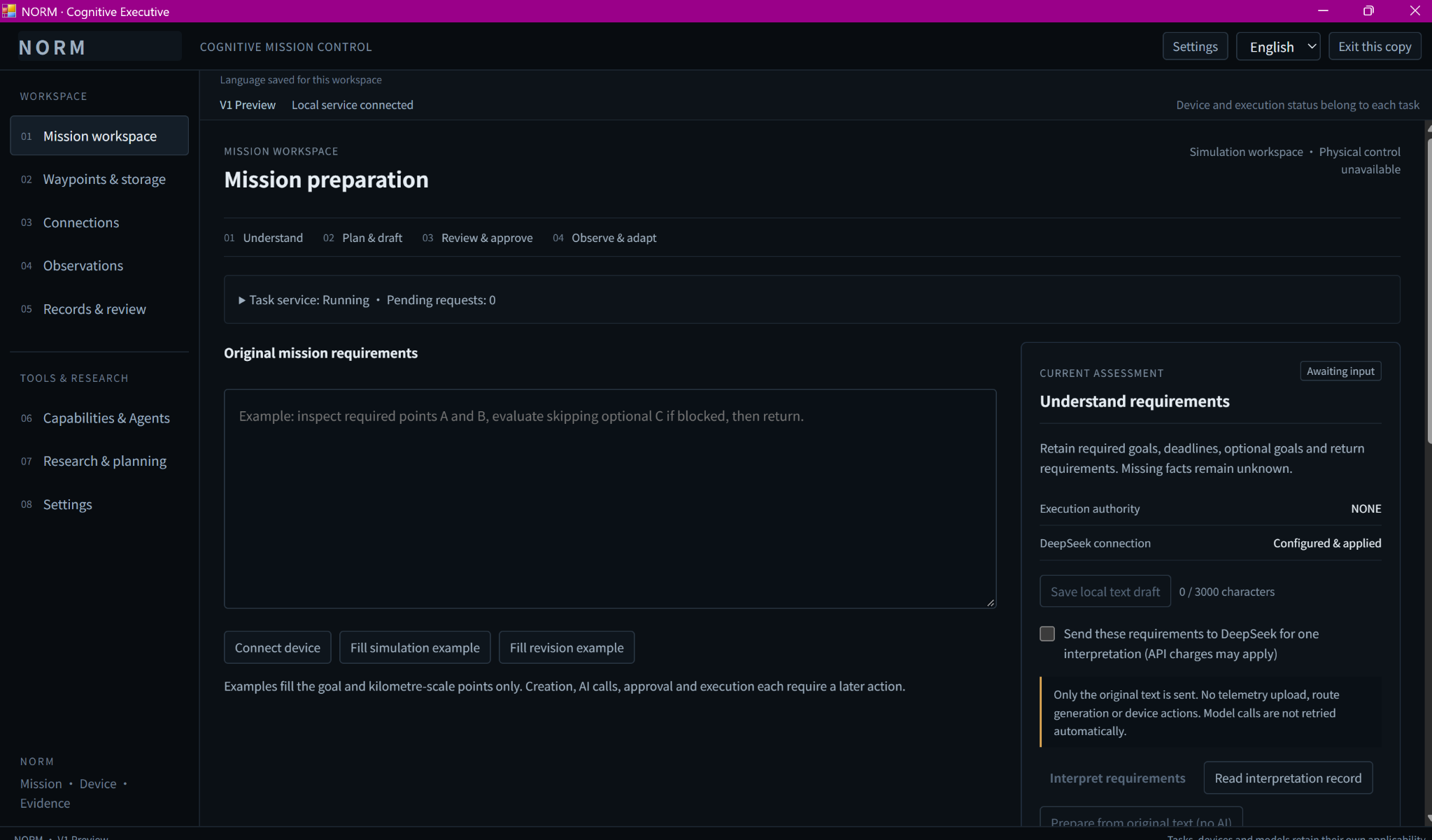
Start with the requirements.
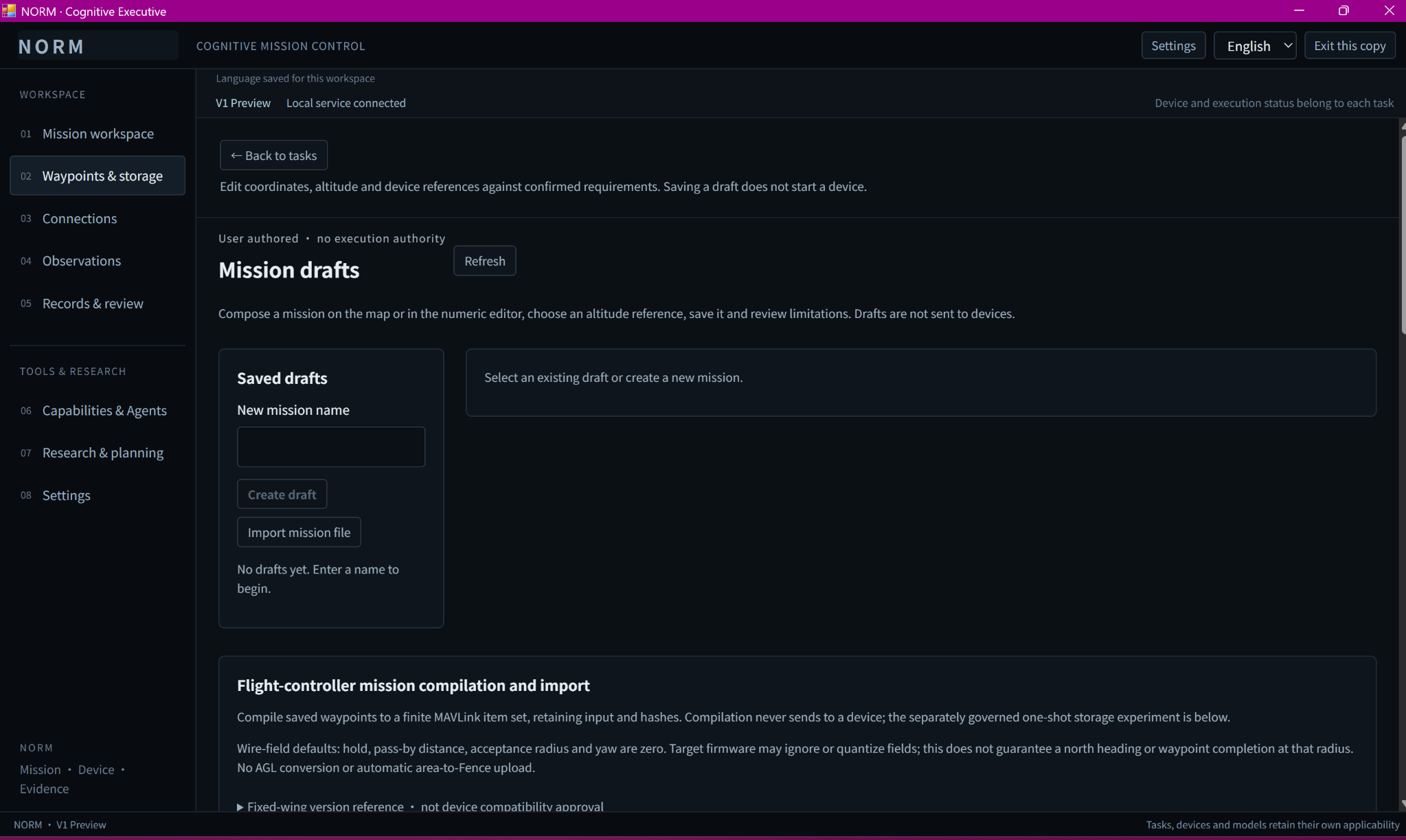
Give the proposed route a proper review.
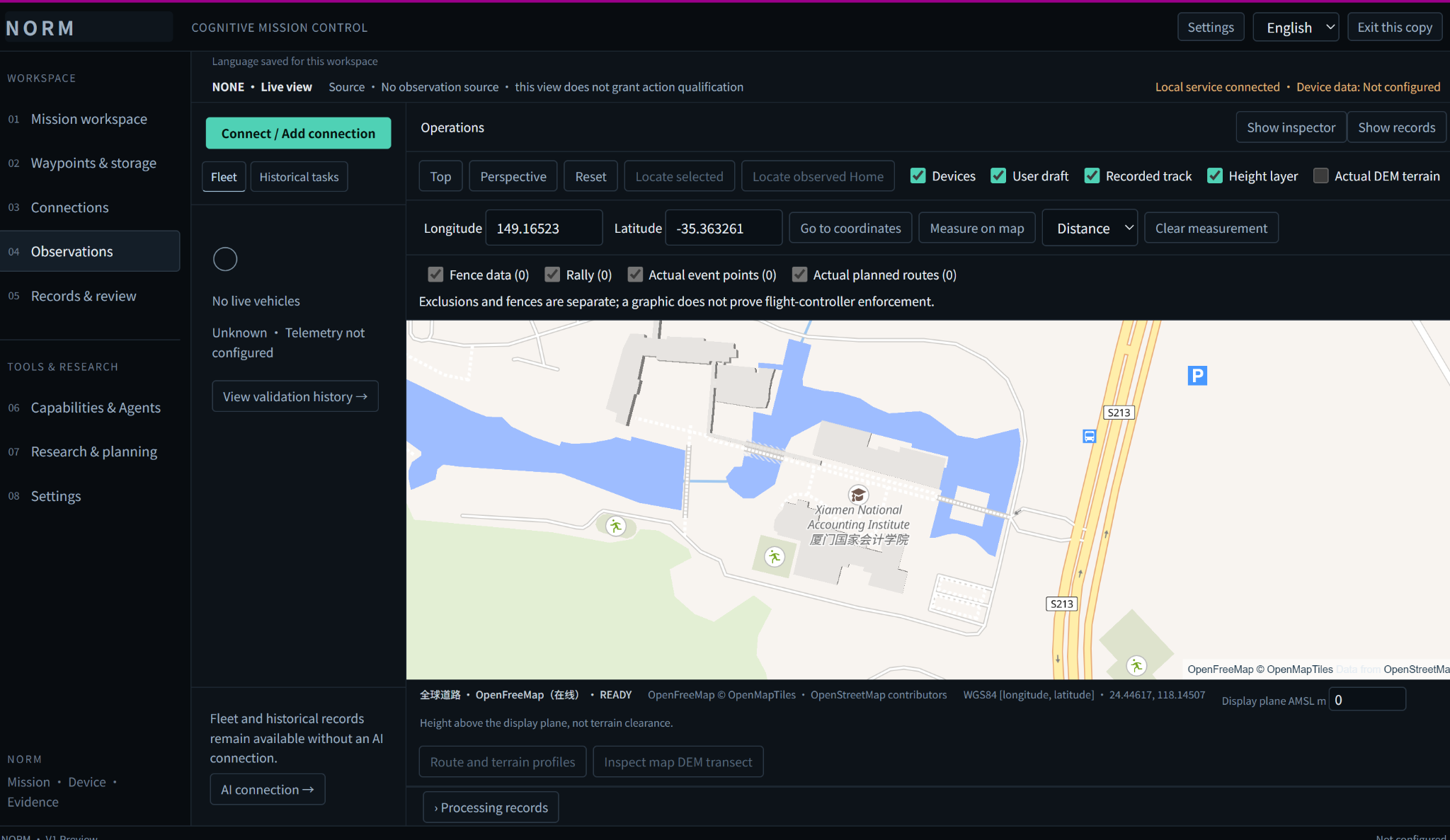
Keep the device context in view.
Actual software captures. The observation views show no live vehicles; they do not establish flight or device-control acceptance.
One thing matters to us: the original requirements must not get lost along the way. AI helps organize, interpret, and suggest. People still check conditions on the ground and approve actions involving a device.
Bring the mission requirements into the workspace so the proposed plan can be reviewed against the original request.
AI helps interpret the request and propose a mission plan. The proposal remains a draft for the operator to examine.
Review and edit the proposed waypoints before deciding whether the plan is ready for approval.
Actions involving a vehicle require human approval. Approval is separate from the AI’s suggestion and from verification of the device result.
Keep device mission records alongside the planning workflow. Full real-device transfer, verification, and limited control are still undergoing acceptance testing.
Available as a Windows technical preview for product discussions and engineering evaluation.
Try organizing requirements, drafting waypoints, working with maps, and reviewing plans. Uploads to real flight controllers and the control loop are still being validated. The preview is not intended for real flights, unattended operation, or production use.
Bring a mission, and see if the next round of preparation can be a little clearer.
hello@normautonomy.com